Detroit is in the news and from a distance the implications are scary. My only experience with Detroit was driving through on the way from Flint to Windsor, Ontario. Our two children had been involved with the CANUSA Games and made a few friends in Flint. Detroit, although having a few impressive skyscrapers also had a lot of boarded up buildings. Flint, too is in the news as the result of short sighted budget restrictions.
I grew up in Oshawa, a town dominated by General Motors, like Flint and Detroit. My father, an independent trucker and a champion rally car driver distained General Motors. In fact Oshawa prospered anyway. Not so much Flint or Detroit from what I could see. My father thought General Motors was very arrogant and not adapting to the future. I heard these opinions over 60 years ago and so was not surprised hearing of their financial problems developing over more recent decades.
Perhaps Detroit and even Michigan had allowed themselves to become too dependent on the auto industry. After 2008 some very difficult decisions were made that allowed General Motors to survive, but at the expense of many jobs. Detroit's tax base has eroded.
When tax revenues decline more difficult decisions have to be made. It is unfortunate that too many governments think education is one area where a lot of cuts can be made with minimal fuss. Republicans especially seem to hate unions and that especially includes teacher unions. Teachers have had to knuckle under like many of fellow citizens, but they have fought back not only for their job security, but for working conditions.
At one point they were asked to choose between their salary being distributed during the academic year or spread over the whole year. Apparently over 2/3 opted to be paid over the full year, but more austerity measures threatened to cut off income over the summer months. Forbidden to go on strike the teachers opted to call in sick in large numbers effectively closing most schools. As with any big school system shutdowns lead to all sorts of personal problems with parents having to arrange childcare. A few thoughts on what teachers make and it is not just money: http://www.therealjohndavidson.com/2012/11/what-teachers-make-by-taylor-mali.html
It is unfortunate that many problems are not dealt with until they become painful for others. As I understand it there will be some government aid arriving to at least stabilize the system temporarily.
What frightens me is that too many governments see education as a factor that can be minimized safely. Perhaps with aging populations fewer parents are involved. Perhaps anti-unionism has successfully painted teachers as greedy incompetent devils. Perhaps poverty has actually made teachers' jobs more difficult.
My contention is that education should be the number one priority as it affects everything else. Our future is in the hands of our children. The skills and attitudes they bring to their adulthood will affect everyone directly and indirectly. They will run our businesses, decide how we deal with the rest of the world and take care of us in our old age. They will have to compete against the rest of the world, much of which does value education. Consider: http://www.therealjohndavidson.com/2011/11/education-and-our-future.html
Education is a big challenge. Teachers are a critical part of it and they need to be thought of as engineers of our future. Getting a youngster to read and understand numbers opens up doors. Developing innate talents can lead to skills needed by the rest of us and even to innovations that will improve our lives. Critical thinking skills will assure that future citizens understand what is really important and make better decisions.
Taxation needs to be increased. We don't need to pay lot of attention to the effects on the "job creators" as the real job creators are those who spend money at the grassroots level. The real future will be determined by our children and teachers will have a lot of input. There will be resistance to increasing taxes, but at the very least education needs to rise higher as a budget item
Teachers cannot do it alone, but if they are respected and appreciated we will all be better off. We should make the profession one that is desirable with money, working conditions and most critically with respect.
One education expert I respect is Diane Ravitch and you can learn more about how she thinks at: http://www.therealjohndavidson.com/2014/02/reign-of-error-what-direction-should.html
Showing posts with label Diane Ravitch. Show all posts
Showing posts with label Diane Ravitch. Show all posts
Thursday, May 5, 2016

Thursday, February 27, 2014
REIGN OF ERROR WHAT DIRECTION SHOULD SCHOOLS FOLLOW?
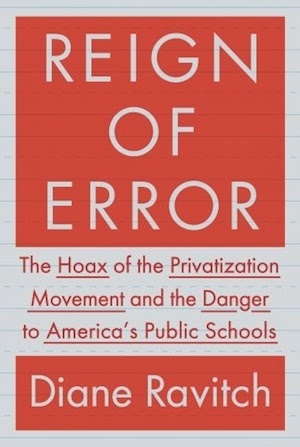 Privatization is a favorite word of some people, but when it comes to education Diane Ravitch becomes concerned. As soon as profit motivations are in control the concern for expenses shapes everything. She finds herself arguing against the likes of Bill Gates, Barrack Obama and Michelle Rhee. I put myself on Diane's side.
The so called "reform" movement has decided that schools should be held accountable and that the best method is through testing to measure the child, the teacher and the school. Several objections arise. Those who are to be accounted will select students who will make them look good, in other words avoid problem students. Teachers will as much as possible teach to the test as a protection, putting other things to the side. Furthermore as has been found in several instances cheating goes on (and not just at the student level). Being accountable through tests can actually deprive youngsters of a true education.
It may be unfair to brand a whole movement as evil and incompetent that has such strong public support as American charter schools. There are powerful Republican and Democratic government officials in favour of them and I might add powerful corporate figures. Diane Ravitch used to find their views acceptable, but in "Reign of Error" she attacks them.
My own bias is evoked when powerful or loud people attack teachers. Are they really the problem? As I read recently everyone was a student and feels they know all they need to know about teachers. At the same time we also personally feel outsiders do not understand our job.
The author points out that "reformer" advocates claim that improving education will improve poverty. She feels poverty and racial isolation are more basic to the issue and back it up with some studies. In reality many of the reformers have a hidden agenda.
Conservative reformers do not trust government. They think schools should be run more as a business. They believe testing is one tool and another is the ability to fire anyone not measuring up. Some also seem to believe that teacher training is not as important as picking the right people and getting rid of the wrong. Some see an opportunity to make money and rationalize the process. Motivations also include religion which in many cases wants to stifle science.
Getting back to my basic bias that teachers deserve more respect. Many teachers aside from wanting to teach, crave security, so firings can frighten off some prospects. They are not the most basic part of education--parents are. If the parents see to the health of their children and provide an atmosphere conducive to learning they will learn more effectively. With two parents working and more distractions than ever, raising children is a challenging task that few are really excellent at, including myself.
Too many people feel that education should be like a business. But unlike businesses the job of schools is to work with whatever is available. In other words they don't get to choose, whether a youngster is dedicated, talented or not, all are to be welcomed and encouraged to develop their talents.
Diane does offer lots of solutions to improving the American education system.
Testing to common standards is desirable, but should not be the only point of school. When teachers are forced to teach to the test they are limited in meeting the needs of their students. Testing does help uncover weaknesses, but should not be used as a stick to punish those who do not control all the variables.
Stability is critical to improving schools. The reformers have caused a lot of turnover, not just by firing, but by discouraging. It is important to attract good people who are properly trained. Money attracts stronger candidates, but perhaps as critical is respect. No teacher (or any professional) is perfect when they start their job, but they can all improve. Supervision, mentoring, further education can all be helpful.
She disagrees with the premise that poverty and racism are just excuses for education failures. Of course exceptional people overcome all odds, but by definition most people are not exceptional. She feels the process starts before birth with pre natal care that is usually lacking amongst poor people. It continues into the pre school age health care. Nutrition is very significant. Poor people are at a disadvantage during the school holidays while their richer student colleagues more often are involved with enriching activities. To really rectify the imbalance between rich and poor means offering alternatives and at heart really dealing with the bigger issue of poverty.
Diane offers a lot of research and much detail to improve education. She feels teachers are the best source for how to improve education, not relatively uninformed business people, politicians or professionals that often have ulterior motives. Any nation's most important resources are its young people, for they are the future.
Here in Canada a problem is the entrenchment of retired teachers as supply teachers. It is natural for school authorities to prefer experienced teachers, especially since they probably know them personally, but how are youngsters to get started? There are lots of enthusiastic graduates of Teachers' Colleges after having been encouraged to enter find there are few jobs open to them. The Ontario government has lengthened requirements for teacher training in one effort to alleviate the problem. Smaller classes are better for students and teachers and should be a higher budget priority. Mentoring by retired and experienced teachers would open up more opportunities as well help to improve younger teachers. Awaiting these suggestions the immediate priority should be to limit retired teachers from taking the majority of supply openings.
Subscribe to:
Posts (Atom)