Showing posts with label Ryusei Yokkhoma. Show all posts

Sunday, March 10, 2024

The Parades, a Japanese fantasy film on the afterlife

Most of us have regrets and in fact we take our unresolved regrets to our graves.  "The Parades" fancies how some of them might be handled.

We first see a young mother searching for her young boy after a natural disaster, a tsunami.  After a short while we realize that she is dead.  She is led to a group who in a round about way explain they are all in a similar situation.  Dead and with unresolved regrets.  In the next two hours or so we watch as they try to resolve their regrets.

One character, Michael is a film maker and throughout the story presents films that explain some of his regrets while helping others with theirs.  A big regret of his was leaving a woman he loved.  Towards the end the characters accept their situation and through some fantasy are able to alleviate their guilty feelings.  The film is dedicated to "Michael."

You may not be in the mood for such wanderings, but at some time they may help wake you up to your own regrets.  Earlier blogged about Daniel Pink's book on regrets that you might find helpful:  http://www.therealjohndavidson.com/2022/06/the-power-of-regret.html

The story is gentle and the acting, music, cinematography and writing are top notch.  Here are some of the contributors.

 Michihito Fujji is the writer and director.  He has 29 credits as director 15 as a writer and 4 as producer.  "The Journalist" (2019) was one.  Check:  http://www.therealjohndavidson.com/2022/01/the-journalist.html 

 Yojiro Noda handled the music.  He has 10 credits as an actor and 2 as a composer.   He was the lead singer, songwriter and guitarist for Radwimps. It is him singing during the end credits.

Kesuke Imamura is the cinematographer.  He has 22 cinematography credits.

Masami Nagasaw played the single mother at the beginning of the film.  She has 99 credits including "Our Little Sister" (2015).  She once learned Mandarin for a Taiwanese film. and was also a spokesperson for Taiwan Tourism in Japan.

Ryusei Yokahoma played aother of the dead regretters.  He has 54 credits including "The Journaist" (2019).  A member of a rock band, a karate champion at a young age and worked in theatre.

Lily Franky played Michael.  His unusual stage name comes "Franky Goes to Hollywood" and from his university affiliation.  He has 96 acting creits and 4 for writing.  His features include "Like Father, Like Son" (2013), "Our Little Sister" (2015" and "Shoplifters" (2018).  Check http://www.therealjohndavidson.com/2015/03/japanese-movies-are-more-than-godzilla.html discusses "Like Father, Like Son" along a variety of other Japanese films.

"The Parades" is available on Netflix, subtitled or dubbed.

As is my usual habit I have bolded the first mention of films I have seen.

Friday, January 28, 2022

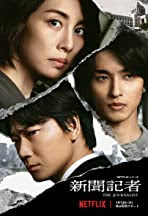
The Journalist

 Corruption is everywhere.  To be honest it is a regular theme of films and in some cases seems greatly exaggerated.  But is it?  If we are not vigilant it is easy to imagine it will take over our lives.  Fortunately there are still people dedicated to fighting it.  "The Journalist" (2022) got my attention by how much effort and time is required to fight it and how realistic it seemed.  Available on Netflix with a dubbed version.

 We often wonder how did someone get to be the "boss"?   Was it hard work and talent?  For many it is.  Most of realize that it is in our best interest to reward hard work and talent.  But others, especially short term thinkers want to do whatever it takes to get what they want as soon as practical.  What they want usually is related to money or power.

The lead reporter Matsuda recognizes a government deal is not right and wants to expose it. A scandal that we realize from the start has its origins at the top.  Being at the top means having power.  Society depends on the rational use of power, but we all know there is much abuse.

Journalists get a bad rap, seemingly more interested in a scoop than facts.  In all cases they have to be responsive to what their bosses want and in turn we realize their bosses are under pressure.  On the other hand we as consumers (including for entertainment), many of us love it when the big guy is exposed.  If too close to our vested interests we might be part of the problem.

There are the crooked insiders, the coerced insiders, the hurt family, the crusading reporter and in this version an impressionable youth.

The bad guys look with their dirty tricks and intimidation like they are going to get away with it.  Japan has a reputation to us outsiders as place where a suicide is more common.  In this case an honest bureaucrat is forced to alter some details to protect his boss(es).  He realizes a lot of harm to others will be done and despite his efforts to reverse.  He cannot live with the guilt and commits suicide which I would classify as altruistic)  He left a suicide note for his wife with one page expressing his sorrow at letting her down  and the second page with details of what he had been forced to do.  She decides to keep it to herself and is resentful of people (especially reporters) at intruding into her life.  

We meet a young boy (late teens) who delivers newspapers, but declares he is not interested in the news.  A girl the same age mocks him, but also encourages him to take an interest.   It is his uncle that he admires who is the one who commits suicide

An interesting technique is to parallel reporter questions on two separate issues  In one instance the reporter is asking tough questions about the scandal.  In another the young trainee reporter is asking the original girl about her prospects.  Coronovirus intrudes as it affects the girl's job offer.

The ending is unresolved.  We know that a journalist has forced the issue to court and that is the point.  A young man is inspired and that is another point.  

I was impressed with the message and the presentation.  The cast and crew that made it possible are only partly recognized.  Here are a few notes:

Michihito Fuji directed and was one of the main writers.  She also directed and wrote another film "The Journalist" (2019) that had been based on the same author.

Isoko Mochizuki wrote the book based on her own personal experiences as a journalist.   She has been involved with the two films plus a documentary on the filming.

Ryoko Yonekura played the lead character as an aggressive journalist who was also empathetic.   She has been acting in films since 2000.

Ryusei Yokohoma played the naive young man who ended up training to be a journalist.  He is very likable.  Despite his apparent youth he has over 40 screen credits including many series.

Another recent excellent Japanese series on Netflix:  http://www.therealjohndavidson.com/2021/12/japan-sinks-people-of-hope-emigration.html