Showing posts with label Ken Burns. Show all posts

Wednesday, November 26, 2025

The American Revolution as seen by Ken Burns

"The American Revolution" (2025) is a truly mammoth project and requires a more gifted blogger to do it full justice.  Anyone who tackles it is certain to remember some themes more than others, but all the details are important to understand how the colonists were victorious and how the process affects modern day America.  You will get my perspective and if really interested in addition you should seek other viewpoints with different focus points.

The series covers in reasonable detail many battles, both won and lost.  Of interest to me were the many cultural factors that helped the rebel victory and the Loyalist evacuation. 

The story starts with the establishment of the British Empire in the New World.  One historian pointed out that profitability was tied to the percentage of slaves.  Massachusetts was the least profitable in the 13 colonies, South Carolina was more profitable, but the most profitable was Jamaica along with other Caribbean islands where the British stationed the most military troops and ships.

Not covered in the series, but with some relevance was that England had unloaded convicts, political prisoners and prisoners of war as much as 120,000 to the Americas.  In Australia such citizens were critical to the development of that country.  The pamphlet "Common Sense" written by Thomas Paine was very persuasive in turning more colonists against Britain.

Before the Revolution began there were numerous small incidents.  The Boston Tea Party was over taxes without representation.  John Adams successfully defended some British soldiers who had killed some colonists.  The Quebec Act meant to mollify francophone speakers offended the English speaking colonists.   Benjamin Franklin at an early stage tried to organize the 13 colonies for unified action against the British, but after much quarrelling it disbanded.  As rebellious sentiments expanded it became difficult to decide who to trust, rebels or Loyalists.  Although historians describe the conflict as the American Revolution it was somewhat like a Civil War.  There were many colonists satisfied with the status quo and even felt a debt of gratitude to the British. 

A Continental Congress was formed from the 13 colonies to co-ordinate the Revolution and other affairs among the participants.  They initiated a Continental army and found George Washington to lead it.  They developed a currency (a coin was designed by Franklin) that was intended to make payments, but carried little credibility.  They spent much of their time protecting their individual jurisdictions. 

George Washington was noteworthy because he consulted with his generals in forming strategy.  There were many setbacks over the course of the Revolution, but he was persistent and learned from mistakes.

Thomas Jefferson was asked to write a declaration that signalled a justification for independence.   He advocated it was a duty to throw off tyranny and that all men are created equal.  Jefferson was of course a slave holder and it is thought conscious of his slaves.  The Declaration of Independence was signed on July 4, 1776 and might be considered the official start of the American Revolution.

George Washington had his hands full.  Most of his soldiers were poorly trained, but perhaps more importantly, poorly fed and paid.  Starvation was ongoing especially in winter.  Clothes were difficult to replace and they often took clothes off the dead.  There were contracts, but when they expired the men left.  At one point mutinies among his soldiers was so great that Washington decided on an execution of two ringleaders in front of their men.  

Most financing came from foreign sources.  Robert Morris built his fortune trading goods by ship to the West Indies, Africa (including slaves) and as far away as India.  He became the main financier for the rebels and was an signer of the Declaration of Independence. 

Colonists decided it would be beneficial to defeat the British in Quebec and perhaps make it the 14th colony.  They succeeded in conquering Montreal under General Montgomery who then traveled towards Quebec City to join up with General Benedict Arnold.  However in mid winter and with the British in a better position forced them back.  Retreating back to Montreal, they were also forced out of there.  Alliance with indigenous tribes allowed the British to push rebels back to the 13 colonies. 

The indigenous were independent with tribes that fought each other.  Colonists felt they needed to expand to the west pushing aside Indians.  The tribes had to make decisions.  Altogether there were more of them than of the colonists and many were aware that the colonists chafed at British restrictions that kept them from crossing the Adirondacks.  Towards the end of the Revolution rebels burned many towns of the Six Nations Confederacy.

Some tribes had evolved a democracy that was effective and later studied by some of the nation's founders.  One item dismissed, was that women were given a real voice with some tribes.

The Six Nations Confederacy (Mohawk, Cayuga, Seneca, Onondaga, Oneida and Tuscarora) felt they were in the middle and needed to take a side to survive.  They had fought with the British in the past (against the French).  The key decision was made by Joseph Brant to fight with the British.  His sister Molly was the consort of Sir William Johnson, the British Superintendent for Indian Affairs.  My two children were born in Joseph Brant Hospital in Burlington, Ontario. 

Africans, either slaves or freed or escapees were important.  About 15,000 supported the British if they would gain freedom and Britain, the major slave trader offered freedom for any who would fight against the rebels.  Others, mostly freed wanted to support the colonists, but only about 5,000 joined the rebels.  George Washington who brought a loyal slave with him, rejected recruiting them.  Some said he felt they would be inferior, but others thought he feared encouraging Africans would lead to the loss of slavery.  Slave holders in his  home state of Virginia feared rebellions such as had occurred in Jamaica.  In the end Africans made significant contributions for the rebel cause and also were effective for the British.  Some professional black soldiers had come from what became Haiti 

The British were able to use 30,000 professional soldiers known as Hessians from what later became Germany.  At first they disdained rebel soldiers and especially blacks and indigenous, but gradually came to respect them.  Some of them ended up staying in America.  After a series of defeats, Washington's troops defeated the British at Trenton, New Jersey capturing 1,000 prisoners that proved to a morale booster and a turning point.

Small pox was a concern.  George Washington had suffered it in his youth and was very careful to guard his troops against it using mainly isolation as the alternative.  An available primitive inoculation would have been too disruptive and risky.

A key subordinate was Nathaniel (often spelled Nathanael) Greene who had been in charge of the Rhode Island Army.  Working with Washington he became a Quartermaster General with one success in bringing in a herd of cattle.  He went on to command rebel forces in the South and was the key leader attacking Yorktown.

Quakers had a significant presence, particularly in Pennsylvania, and felt their religion required them to be neutral.  They refused to condemn the British and avoided any aid to the rebels.  Many of the colonists stole supplies from the Quakers.  Some of my Mennonite ancestors lived nearby in Lancaster, Pennsylvania also tried to stay out of the conflict and later (just before the War of 1812) migrated to Canada near Markham, Ontario.

John Paul Jones at a young age was able to work up to a command position in a British ship, but had a legal problem after killing an insubordinate crew member and decided to run away to America.  He had served on a slaving ship, but found that distasteful.  From Virginia he joined the Continental navy such as it was.  He fought successfully against English ships in European waters.  He is considered one of the founders of the U.S. Navy. 

Benedict Arnold had fought early in the Revolution and had been regarded as intelligent and brave.  However he felt he was not given enough credit for his accomplishments while some of his subordinates thought he was corrupt.  He owed money due to a wealthy lifestyle.  In Philadelphia he courted and then married Peggy Shippen from a wealthy Loyalist family.  Soon he switched sides and became a British commander and sent to fight in Virginia.

Benjamin Franklin and John Adams had been sent to Paris to convince the French to support the rebel Americans.  For some frustrating time the news was discouraging and the French could not see any value is backing an army that seemed likely to lose.

The Marquis de Lafayette, a young aristocratic Frenchman came to America looking for adventure contacted Washington and was given command for a few battles.  He returned to France and worked with Franklin and Adams to successfully persuade King Louis XVI to back America.  In 1780 he returned to America promising 6,000 troops and 6 warships. 

Slavery in the south had a negative impact.  Slave owners exempted themselves from military duty and then their overseers in order to keep control of slaves. 

Women played a role supporting their men.  Abigail Adams felt the women deserved the vote and had been a strong support for her husband John Adams.  With no men bringing in money, many women had scrambled to make money some turning homes into boarding houses.  A few became spies.  At one point some of them organized to ask Washington about fund raising to give money for the soldiers, but it was felt they would spend the money on rum. Washington suggested they sew shirts which they did.

Spain decided to help the rebels, but had an ulterior motive.  They defeated the British in the south and re-claimed Florida.

The British had been forced out of most of the north and were determined to hold Yorktown in the south.  This is when the French joined in a big way and forced the British to surrender in 1783.  The British determined that further effort was not worth it.  Britain had a bigger investments in the Caribbean and had shifted resources to protect that part of their Empire.  In England there had been a change in Parliament that favored surrender.

The Loyalists were attacked by the successful rebels and felt unsafe.  Many had been killed and others had property confiscated.  The British negotiated a treaty to ship large numbers of Loyalists, many of whom chose to settle in Canada.  One group of Africans took part, but a section of them broke off and moved to Sierra Leone in Africa.

To the left is a statue in my adopted city of Hamilton, Ontario to commemorate the British Empire Loyalists who played an important role in the development of Canada.

Among the 13 colonies there were many quarrels, soldiers were demanding back pay and others were itching to conquer the west.  The contributions of indigenous tribes were forgotten.  Europeans were dismissive of America developing any cohesion and would likely break into smaller pieces.

However the Americans realized they needed to organize a central government balancing legislative, executive and judicial powers. 

After ratification of the treaty in 1787 to end the Revolution, George Washington relinquished his military power and left for home. A new constitution was ratified in 1788 with elections held from December 15 to January 7th that was easily won by Washington as president with John Adams as Vice President.  He was admired by all Americans and could have been a dictator.  At the end of his second term he passed on his presidency to his successor, John Adams.  The revolutionary idea was that the government gets its power by the consent of the people.

This series requires a lot of talented people to contribute. 

Ken Burns is the key person behind this series.  He is a director and a producer.   Ken  has a long history of dealing with important people and events in depth  and comprehensively such as "The Civil War (1990), "Jazz" (2001), "Baseball" (1994 and 2010), "The Central Park Five" (2012), ""The Roosevelts:  An Intimate History" (2014) "The Vietnam War" (2017). "Hemingway" (2021), "Muhammed Ali" (2021) "Benjamin Franklin" (2022), "The U.S. and the Holocaust" (2022) and "Leonardo Da Vinci" (2024).    see   http://www.therealjohndavidson.com/2024/12/leonardo-da-vinci-ken-burns-version.html  and http://www.therealjohndavidson.com/2022/07/benjamin-franklin-ken-burns.html

Geoffrey C. Ward was the writer.  He has won 6 Prime Time Emmy Awards.  Geoffrey has 28 writing credits and 20 for additional crew including "The Roosevelts:  An Intimate History" (2014), "Hemingway" (2021) and "The U.S. and the Holocaust" (2022).  See http://www.therealjohndavidson.com/2022/09/the-us-and-holocaust.html

David Cieri was the composer.  He has 63 composing credits, 11 for the music department and 2 as actor including "The Roosevelts:  An Intimate History" (2014) and "Hiding in Plain Sight" (2022).

Buddy Squires was the cinematographer.  He has 142 cinematography credits and 3 for directing including "Muhammed Ali" (2021), "Benjamin Franklin" (2022), "The U.S. and the Holocaust" (2022) and "Leonardo Da Vinci" (2024).  See http://www.therealjohndavidson.com/2022/02/muhammad-ali-by-ken-burns.html

Tricia Reidy was an editor.  She has 20 editorial credits, 3 for the editorial department and 2 for additional crew including "The Roosevelts:  An Intimate History" (2014) and "The U.S. and The Holocaust" (2022).

Peter Coyote was the narrator.  His last name was inspired after ingesting peyote and fitting in with his interest with indigenous culture.  Acting led him to many narrating roles including the 2002 Winter Olympics and many of Ken Burns productions.  He has 170 acting credits, 2 for producing and 2 for writing including "E.T. The Extra Terrestrial" (1981), "Jagged Edge" (1985) and "Erin Brockovitch" (2000).

Well known actors voiced different roles including Adam Arkin, Kenneth Branagh, Josh Brolin, Hugh Dancy,  Claire Danes, Tom Hanks, Damian Lewis, Matthew Rhys, Liev Schreiber, Craig Ferguson, Paul Giamatti, Lara Linney, Edward Norton, Jeff Daniels, Ethan Hawke, Samuel L. Jackson, Domhnall Gleeson, Mandy Patinkin, Tantoo Cardinal, Michael Keaton, David Oyelowo, Bill Camp, Morgan Freeman, Wendell Pierce, Meryl Streep, Maya Jasanoff, Annette Gordon Reed and Maggie Blackhawk, 

Historians explained different aspects of the Revolution.  Paintings of Revolution events were used.

I watched the PBS broadcast and it should be available in DVD and Blu-Ray.  You will need a lot of concentrated time to really experience it as there are a lot of details, many of which are barely known by the public. 

As usual I have bolded the first mention of films I have seen.  They are not necessarily a recommendation, but generally I found them worthy of my time.  If you follow the links you should be able to determine if a particular film is worth following up. 

Tuesday, December 17, 2024

Leonardo Da Vinci--the Ken Burns version

Ken Burns  has a long history of doing documentaries based on American cultural and historical issues.  Walter Isaacson had dinner with Ken and suggested that Leonardo Da Vinci was the preeminent scientist/ artist of the millennium.  With that endorsement the documentary started.

Leonardo was born illegitimate, but his father supported him getting him an apprenticeship.  He proved himself at a young age and was given more opportunities.

One outstanding feature of trying to understand Da Vinci was his reverence for nature.  Partly it sprang from his interest in perfecting painting.  He wanted to better understand what was under the skin and began to study anatomy and dissecting human (and other animal) bodies.  That expanded to an interest in optics from which he learned to use shadows to create the illusion of depth.

His curiosity about nature was ever expanding.  He thought a lot about flight observing birds and bats.  He strived toward human flight, but unfortunately his ideas depended on the weight of available materials.  

One challenge he felt was to divert the Arno River that flows by Florence.   This  involved studying hydrology, one side effect was to make water flow upwards.  Unfortunately the resources to actually divert the river were not available.

He was also an inventor and hired by military forces.

He is best remembered for his many paintings especially the Last Supper and the Mona Lisa.

In his last years he felt he was being spied upon and kept his notes in code.  That habit helped inspire the theory about the Da Vinci Code.In his life Da Vinci lived in Florence, Milan, Rome and died in France. 

Ken Burns is a key person behind this series.  He is listed as an executive producers while his daughter Sarah Burns and son in law, David McMahon were the producers.  Ken  has a long history of dealing with important people and events in depth  and comprehensively such as "The Civil War (1990), "Jazz" (2001), "Baseball" (1994 and 2010), "The Central Park Five" (2012), ""The Roosevelts:  An Intimate History" (2014) "The Vietnam War" (2017). "Hemingway" (2021), "Muhammed Ali" (2021) "Benjamin Franklin" (2022) and "The U.S. and the Holocaust" (2022).    see http://www.therealjohndavidson.com/2022/07/benjamin-franklin-ken-burns.html

Caroline Shaw provided the music.  She has 15 composing credits, 3 for the music department and 3 for acting.  There is a special feature on her with the DVD for this film.

Buddy Squire was the cinematographer.  He has won 5 Prime Time Emmy Awards.  He has 136 Cinematography credits plus 9 as producer and 3 as director including "Hemingway" (2021), "Muhammad Ali" (2021), "Benjamin Franklin" (2022) and "The U.S. and the Holocaust" (2022).

Woody Richman did editing.  He has 21 credits including "Fahrenheit 9/11" (2004), "Capitalism:  A Love Story" (2019) and Muhammad Ali" (2021).

Keith David, the winner of 3 Prime Time Emmys was the narrator.  He has 385 acting credits and 6 as producer.including  "Bird" (2016) "Greenleaf" (2016), and "From Scratch" (2022).

Throughout the four hour documentary there were many art experts and others giving insight into how Da Vinci thought.

Guillermo del Toro was one of the commentators.  He has won 3 Oscars.  Guillermo has 37 writer cfredits, 47 as producer and 3 for director including "Cronos" (1993), "Pan's Labyrinth" (2006), "The Hobbitt:  The Desolation of Smaug" (2013), "The Shape of Water" (2017 filmed partly in my adopted city of Hamilton), "Nightmare Alley" (2021) and "Guillermo del Toro's Pinocchio" (2022).

Walter Isaacson is a writer who specializes in biographies of prominent people such as Steve Jobs and Albert Einstein.  See the book version  http://www.therealjohndavidson.com/2018/05/leonardo-da-vinci.html

It is really mind opening that one man with relatively few tools discovered so many things and developed beautiful art.  I saw the film on a DVD.

As usual I have bolded the first mention of films I have seen.  They are not necessarily a recommendation, but generally I found them worthy of my time.  If you follow the links you should be able to determine if a particular film is worth following up.

Sunday, September 25, 2022

the U.S. and the Holocaust

History is full of events and opinions that do not reflect our better nature.  Canadians cannot be exempted from these black spots including ones brought to light by Ken Burns. 

 Hypocrisy has always been in good supply.  We look with horror at the Holocaust and have great difficulty imagining how it was even possible.  Americans can take solace in that they accepted more Jewish refugees than any other nation and were instrumental in militarily stopping Adolf Hitler, but there is another side to the story with parallels in the present.

 "Americans" have been welcoming European workers while pushing out the indigenous and bringing in Africans to be slaves.  Before the Civil War most immigrants came from northern Europe.  Afterwards those from the south and east of Europe came in greater numbers and at first met with resentment.  Chinese were brought in to build railroads, but also inspired an exclusion act.

Jews at one time made up almost a quarter of the population of New York City becoming the largest concentration of Jews in the world.   Problems were attributed to Jews such as crime.  Eugenics, financed by wealthy and powerful reared its ugly head.  Sterilization became legal in most American states.  

Henry Ford was a prominent anti-Semite publishing in different languages including German.  Jews were restricted in university admissions, jobs  Politicians could get elected with anti immigrant policies.  Immigration laws were enacted that favored northern Europeans.  Asian immigrants were illegal.  South Americans allowed in for labor only.

Hitler (while in prison) was pleased to learn that many Americans were advocating for a Nordic population.  Hitler felt a duty to rid the Jewish Bolshevik leaders that corrupted different parts of the world.   Mexicans were repatriated during the Depression.  In 1932 more Americans left than came in.  

By 1933 American journalists made the public well aware of Nazi anti Jewish acts.  American Jews found themselves in a dilemma--keep quiet or protest.  Regardless German Jews would suffer while Hitler thought Jewish actions only proved his anti-Jewish rhetoric.  During the Depression , the state department under Cordell Hull wanted to increase trade.  Immigration became more difficult.  Popular right wing religious leaders were blatantly anti-Semitic.  Germans modeled anti-Semitic laws on Jim Crow laws.

By 1937 fascist countries had become aggressive--Spain, Italy and Germany.  United States did not wish to intervene.  Hitler was a very stirring speaker.  By 1938 Hitler was welcomed in Austria and amalgamated.  Americans fired Jewish employees in Germany.

The world knew of the situation, but did not want to help out.  Hitler took over Sudentenland despite defense agreements involving other countries, notably Great Britain.

Kristallnacht, the night of the  broken glass November 9 and 10th, 1938- not only in Germany, but also Sudetendland-supposedly in retaliation for assassination of a German diplomat.  Businesses were destroyed, houses burnt and for the first time the Nazis rounded up Jewish males for no other reason than being Jewish and sent them to concentration camps.  This was covered on front page of many U.S. newspapers.  FDR was the only world leader to withdraw ambassador from Berlin and allowed visiting Jews on tourism visa to stay.  BUT quotas were maintained and strictly enforced.

Britain allowed 10,000 Jewsih teenagers to immigrate, but not parents.  Eleanor Roosevelt tried to support legislation to help Jewish refugees, but was strongly opposed by prominent racist individuals and organizations, backed by public sentiment.

Events accelerated with an attack on Poland resulting in World War II on Sept 1, 1939.  Germany rapidly conquered most of Europe.  They had made a pact with Soviet Union to split Poland, but in reality Hitler disliked the Jewish influence in Russia.

FDR claimed neutrality while deploring Nazi action  Isolationalists stopped or restricted action that would have relieved Jewish anxiety.

The St. Louis ship was organized to take Jews to Cuba, but rejected by the Cubans and in turn by Canada and others.   U.S. Germans pointed out the hypocrisy while touting their own opennesss.  Finances were organized for some of the refugees to European countries.

After the war began suspicion of German spies among the Jewish refugees became overwhelming, despite total lack of evidence.   The Lend-Lease bill opposed by anti Semitic groups and Charles Lindbergh who had helped form American First that also included Henry Ford, and Avery Brundage.  Getting visas to America became much more difficult.  

British espionage efforts uncovered German atrocities, but Churchill was reluctant to publicize as would let the Germans know they knew lots of details of German war effort.  Roosevelt tried to support the British efforts, but had a lot of political opposition.  Lindbergh even identified Jews as those wanting war and even though he was castigated by many newspapers his sentiments were shared by much of the public.

American Jewish groups helped finance efforts in Europe, allowing a few to escape and others to be hidden.

After Pearl Harbor drew America into the war, Japanese internment camps even for citizens were set up.

Germans developed concentration camps, partly for labour as soldiers reduced the labour force  -Those not productive enough were sent for elimination.  Some Nazis took pride in becoming more efficient at killing Jews and others such as Jehovah's Witnesses, Romany, gays and even some P.O.W..

Awareness of atrocities from newspapers and radio broadcasters such as Edward R. Murrow--state dept was skeptical of reports and felt efforts to rescue would be diversions  Despite the support of the Roosevelts, the state dept was obstructionist.  Henry Morgenthau, Jr., the Secretary of Treasury had protested the Armenian killings and referred to them to Roosevelt.

Eisenhower commanded soldiers to witness some of the camps as he felt it needed to be believed.

After the war for awhile immigration quotas remained in effect and Britain had restricted migrants to Palestine.  Eventually restrictions were removed.  The Nuremberg Trials were the first to try genocidal legal cases.

White supremacy is still a part of America as demonstrated on January 6th.   In truth  Civilization is fragile.  Donald Trump used racist rhetoric to get elected.  Many of his followers weren't overtly racist, but tolerated it as a means to get lesser taxes, or regulations or banning abortions.   http://www.therealjohndavidson.com/2022/09/symbiotic-relationships-drive-right-wing.html

Reaction to the film included an anti-Semitic view.  One felt the Jews were too demanding and now were adding to American guilt.  We see Muslims vilified in a similar manner.  A big ruckus has been made C.R T. where politicians feel Americans should not be made to feel guilt. over racism.

Ken Burns is a key person behind this series.  He has a long history of dealing with important people and events in depth  and comprehensively such as "The Civil War (1990), "Jazz" (2001), "Baseball" (1994 and 2010), "The Central Park Five" (2012), ""The Roosevelts:  An Intimate History" (2014) "The Vietnam War" (2017). "Hemingway" (2021), "Muhammed Ali" (2021) and "Benjamin Franklin" (2022).   Check http://www.therealjohndavidson.com/2022/07/benjamin-franklin-ken-burns.html and http://www.therealjohndavidson.com/2022/02/muhammad-ali-by-ken-burns.html

Peter Coyote, the regular narrator for Burns' documentaries. has a lot of experience narrating, but is perhaps better known as an actor.  He adopted the last name Coyote after meeting a Paiute-Shoshone shaman in 1967.  The only American to be directed by Spanish director Pedro Almodovar where he performed in Spanish, "Kika" (1993).  As an actor he has over 150 credits including ""E.T. the Extra-Terrestrial" (1982), "Erin Brokovich" (2000) and "Le Grand Role" (2004 in French).

Some of the commentators were historians.  Others were participants as children or young adults.  One is struck that first hand information is being steadily lost

Racism is one of the major scourges of the modern world.  But we are all in this together.  More thoughts on racism:http://www.therealjohndavidson.com/2021/03/racism.html

As usual I have bolded the first mention of films I have seen. 

Available through PBS and likely soon to your local library.

Monday, July 11, 2022

Benjamin Franklin by Ken Burns

Benjamin Franklin is perhaps the most fascinating character in American history.  His accomplishments are overwhelming, but my interest is his thought process.  Ken Burns captures the essence in a four hour presentation which was shown on PBS stations and is available in DVD format.

He was done with school at age ten and had run away from home as a teen.  He became a very heavy reader.  As he matured he became an organizer and became interested in science.  At one point he became a postmaster and traveled to several states including southern ones.  From this experience he developed a feeling that the colonies should work closer with one another.

As a printer he started "Poor Richard's Almanac" which became very popular.  Partly because he included some sayings that became popular.  One example, "Early to bed, early to rise makes a man healthy, wealthy and rise."  He discussed the path to success analyzing the needed virtues and how to attain them.  He also developed a method for making difficult decisions that became known as the Benjamin Franklin method.

He was always a curious man. Electricity was fascinating and after many experiments he developed the concept of a lightning rod, which as saved many lives.  He also came up with the concept for a battery.  Another project for a relative was to invent a catheter improvement.  He also developed an improved wooden stove and would not accept a patent.  Later in life  he was taken with a musical performance with wine glasses and went on to invent the glass armonica which Mozart composed for.  At one time he was asked about the point of a man bearing balloon and replied "What good is a newborn baby?"

Prejudiced?  Like all humans he soaked in the beliefs of his environment--until he observed the unexpected and questioned them.  He owned slaves at one time and although he had joined anti slave groups for a long time he took it for granted they were incapable of serious discussion.  However when negro youngsters were sent to Philadelphia to learn to read, Franklin appreciated they had thinking ability.  

He also had a low opinion of the indigenous natives, but later was inspired by the Six Nations and their system of government.  He had been involved a little with the French and Indian War that resulted in the French losing territory that included Quebec City and parts of what later became American territory.  He also was involved with the negotiations and was very impressed with how the Six Nations handled themselves feeling that the American colonies should unite and have more power.

The War made the colonies more expensive than earlier thought and the British felt the settlers needed to help pay the extra costs. 

Benjamin Franklin went to London which he found very stimulating, socializing with such luminaries as Adam Smith and David Hume.  He admired the British Empire and wanted it to continue.  He campaigned for his son William and he was named to be governor of New Jersey.  After talking to Lord Howe as a Pennsylvania delegate he was offered state taxation but by this time was too late' he notion of taxation without representation had taken hold.

Maybe not surprising Benjamin Franklin was leaning the Loyalist way, but decided to be a "patriot."  He was the oldest at the Congressional meeting. He had tried to convince Canadians to side with American colonies. 

One of Franklin's contributions was to substitute he phrase "self evident" in place of "sacred" as Jefferson had originally written in the Declaration of Independence.  Part of the effort to separate the state from church.

The War of Independence was really a civil war with many families divided (including Franklin).  His son William remained loyalist.  Franklin was chosen to be envoy to France.  Seeking an alliance in France was very sociable, but he secured some treaties.   Also he met Voltaire, one month before his death.

After the American victory negotiations with England saw Franklin involved.  He dealt with tricky point of not including France in negotiations.  The Indigenous were disappointed with many leaving for Canada leaving a mark not far from where I live.  The Six Nations were granted land along the Grand River.  My two youngsters were born in Joseph Brant Hospital in Burlington.

At the 1787 Constitution conference Franklin was in committee to decide weight of states with different population.  Recognizing the north needed the south for the union he sought compromise.  Each state have 2 senators selected by state.  The House of Representatives membership was to be calculated with members of by population, but allowing blacks to be counted as 3/5 of non slaves.   He recognized faults and proposed agreement to be ratified by states.  He considered democracy an experiment that needed to be tinkered with.

He repaired relations with British friends, but not with son William.   On his 8th ocean crossing Franklin made scientific observations on trip back noting the influence of the Gulf stream.

He died in 1790, April 17th at age 84.  He attracted the largest Philadelphia crowd for his funeral with every church represented.   

A quote I carry with me "For having lived long, I have experienced many instances being obliged by better information or fuller consideration to change opinions, even on important subjects which I once thought right, but found to be otherwise."  Good advice.

My interest was started as a youngster when I was able to watch "Ben and Me" (1951).

A few years ago I was able to have a short Philadelphia visit and checked out Benjamin Franklin.   Check:  http://www.therealjohndavidson.com/2015/07/philadelphia-brief-adventure.html

Sunday, February 27, 2022

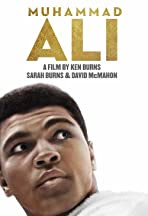
Muhammad Ali by Ken Burns

 Black history month offers many bits of information and as it happens a very interesting DVD became available after a long wait.  Not really a boxing fan,but have come to realize Muhammad Ali had become a hero to millions of blacks and others around the world.

Muhammad Ali was in the news most of my life even though boxing was something that I paid little attention to.  The mini series put together under Ken Burns' guidance made me realize his life was more significant than most athletes.  First released to PBS television it is 8 hours long, but something unexpected seems to happen in every episode.

 Born and raised in Louisville, Kentucky as Cassius Clay.  He did not do well in school and was thought to be dyslexic.    He stumbled on a boxing club that was both free and integrated.  At first not very notable, but applied himself and started leaving a mark winning a national Golden Glove award.  He qualified for the American Olympic team and winning the gold medal.  

My interest in the Olympics really got started with the Rome Olympics of 1960.  That was when Cassius Clay won a gold medal.  Afterwards he wasted little time turning professional.  A group of Louisville men characterized as gangsters took control of his career.  One of his models was wrestler Gorgeous George who was a self promoter and Cassius started spouting poetry and predictions.  Angelo Dundee became his trainer for most of his career.

His career took off and with his sense of humor and brashness he became a fan favorite.   Early on his group got the rights for closed circuit telecasts.  In his fight against Doug Jones he failed to knock out fans thought Jones won, but Clay won a decision (some said it was really a business decision).  His successes led to a title bout with Sonny Liston, an event my friends and I anticipated with contesting who could do the best "I am the Greatest."  This was an historic night that was recently turned into a movie commemorating a meeting involving football star Jim Brown, singer Sam Cooke and Malcom X.  He won the title. 

As his fight career developed he also became interested in the Muslim faith.  He talked to both Elijah Muhammad and Malcolm X.  After winning the title he was ready to announce his commitment.    There was a feud between Malcolm X and Elijah Muhammad.  Cassius announced a new name with an early favorite being Clay X, but Muhammad Elijah suggested Muhammad Ali.

He married a non Muslim woman that had been chosen for him, but it ended in divorce.  Altogether he married three other women, all Muslim and had seven children.

Originally he had been classified as ineligible for the military draft, however as he became famous and switched religions there was resentment and complaints.  He was ruled eligible for the draft.  He is televised while being physically examined and when all that was done he refused induction.  During this time he not only talked with Muslim leaders, but also consulted with Martin Luther King who opposed the Vietnam War.  A lot of legal efforts were made that resulted in him spending a small time in prison,  Eventually his case went to the Supreme Court and his conviction was overturned.  Later he was given a Medal of Honor by President George W. Bush.

He changed his management group to the Nation of Islam.    Herbert Muhammad, son of Elijah became a manager and close friend to Ali.  At one point Malcolm X was expelled from the Nation of Islam and Muhammad also broke his relation to Malcolm X, a decision he later regretted.  Malcolm X was assassinated and there were connections to members of the Nation of Islam. 

After his declaration of being Muslim he had his boxing licence stripped from some jurisdictions.  Some of his future fights were determined by where he could legally fight.  Still he kept defeating opponents like Floyd Patterson, Henry Cooper, George Chuvalo, George Foreman, Ken Norton, Joe Frazier  Larry Holmes, Ernie Terrell.  He fought in London, England; Manila, Philippines and Brazzaville in the Democratic Republic of Congo.  He became a  hero around the globe.  Lost only 5 times while winning 56 bouts and knocked out 37 of his opponents.

A personal note:  while working in the circulation department of the Etobicoke Guardian I had a minor dealing with the Chuvalo family.  Being able to not be knocked down by Ali in two fights he became a hero to Canadians.  

Muhammad Ali had wanted to retire many years before he did, but had financial concerns that required more fights.  He had been inactive for three and half years while legal details regarding his draft rejection.  Likely his boxing career led to Parkinson's.  This was a very humbling experience for the boxer.  A big, but very welcome surprise came when during the Opening Ceremonies of the 1996 Olympics held in Atlanta Ali took the torch and lit the flame.  He had been reluctant because he knew his body would be shaking.  

Ken Burns is a key person behind this series.  He has a long history of dealing with important people and events in depth  and comprehensively such as "The Civil War (1990), "Jazz" (2001), "Baseball" (1994 and 2010), "The Central Park Five" (2012), ""The Roosevelts:  An Intimate History" (2014) and "The Vietnam War" (2017). 

He was entertaining, but also generous and profound.  I will remember his slogan, "Floats like a butterfly and stings like a bee".  This series has been very mind opening.