Showing posts with label Albert Einstein. Show all posts

Thursday, September 24, 2026

Finally a Chance to improve life for Americans

The world has been helpless while Donald Trump has tried to steer America and the rest of the world in a very dangerous path. The mid-term election is only about 40 days away and in fact mail ballots have just about started.  I cannot vote, but will be very affected by the outcome as will everyone else, meaning YOU.

Polls seem to indicate a big switch to Democrats.  There are a lot of tricks that Republicans will try and there will likely be legal challenges.  Do not take victory and the tying up of Trump for granted.  Every vote can make a difference.  Trump is correct when he says he is on the ballot.  The best result will be if voters reduce his power to the point he cannot defy the law.  He will push everywhere he can. 

Trump with a prepared text at the United Nations threatened to annihilate Iran and also to pressure Cuba to change its government.  Is that what Americans want representing them in this very tense world?  This is what is at stake.

In the short time left it seems likely that inflation will be on everyone's mind.  Iran will likely be resisting with significant impact.  Deporting "illegals" likely will be harsher and unjust.  The Trump administration believing their voters really like this effort, will try to cram as much in while they still can.

Trump is stubborn and unable to admit any mistakes or any sign of weakness.  Blaming others for his problems will become more laughable.  He seems increasingly mentally unwell and very unreasonable.  He is less calculating than in the past with his actions hurting his party and even himself.  If he is left with any power it could be disastrous for Americans and beyond.

The time from election to inauguration of the newly elected holds danger, often called the lame duck session.   Republicans will attempt to lock in their policies and prevent investigations with their legal team preparing for possible impeachment.  Democrats need to be careful.  Prioritizing will be difficult.  Impeachment can be very time consuming, distracting and wasteful.  They should assert Congressional powers regarding tariffs, war, health, etc,  

There are many reasonable people contesting the election and I would like to single out Abdul El-Sayed.  He reminds me of Pete Buttigieg as he is very logical.  His problem is that racists are out and he has been declared an enemy by AIPAC.  American have too often given into prejudicial ignorance when more than ever they need a clear head.

Albert Einstein gave his support to the Hebrew University, but became concerned over Jewish attitudes regarding Arabs.   As far back as 1929 he voiced such opinions as "Should we be unable to find a way to honest co-operation and honest pacts with the Arabs then we have learned absolutely nothing during over 2,000 years of suffering."  Are Americans finally getting a truer picture or is the water being muddied. 

The Republicans have a sorry record but always rely on prejudice.  Lately one target has been trans sexuals.  Recently learned of a new insight into transexuals.  I had been told that for many, the desire to be different is very strong.   I recall working with a family through their newspaper carrier son and successful canvasser.  He acted very feminine, but had a sister who acted masculine.  Such youngsters tend to be made fun of, but want to be their natural selves.  Parents don't want a sex change, but fear for the sanity of their children with some even being suicidal.

Progressives are on a delicate balance with most distrusting Trump, but realize voters fear change.  America is so diverse and although there are some intermingling with better understanding, there is also fear and hate generated by a minority.

The environment is on the ballot.  It was pointed out that states have significant control over environmental issues.  It seems likely hatred of Trump will result in federal switch to Democrat policies that are more environmental friendly.  Inevitably some will vote Democrat at the Federal level (for senators and house reps), but go back to their natural political voting at the state level.  For the environment generally, Democrats are better, but should there be exceptions-the environment should be the factor.

The Trump team has all been chosen for loyalty, not expertise.  Many of his key supporters lie to suck up to him.  They have suffered at the whims of a very vain, provocative man and in turn so has the rest of the world.

There will be countless people concerned about the result, but only a few have the tool to make a real difference.

Sunday, February 13, 2022

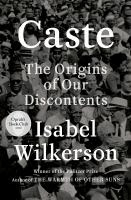
Caste: The Origins of Our Discontents

Caste was thought to be another form of racism, however the author points out that caste is more basic.  Caste is society's way of classifying and ranking humans and it can be done in many forms.  Racism is a common factor in caste.  Racism is a tool that fits with caste, but other tools are available. Human psychology is more basic.

Wilkerson focuses on three examples of a caste system, the United States, India and Nazi Germany.  Martin Luther King Jr. had formed the idea that the caste system of India had similar characteristics to Jim Crow America.  On a visit to that country he was surprised to learn that he was considered an "untouchable."  At first he thought it strange, but later agreed.  To the Indian that term, "untouchable" was the lowest of the low.  

Bhimrao Ambedkar was born an untouchable, but as an educated and politically active man he was able to change the official designation  to "Dalit" which translates to "broken".

Europeans in North America at first tried to use indigenous people as slaves, but found they were too subject to European diseases, but learned that Africans were not.  Many Americans think slavery is old history, but in fact it formed a key factor in the American economy that has impacts today.  http://www.therealjohndavidson.com/2016/12/the-half-has-never-been-told.html

Wilkerson notes 8 pillars of a caste system.  It has a divine justification.  Your rank is inherited.  Endogamy meaning marriage and sex only within the caste.  Purity must be maintained with very restricted contact.  A division of labor which dictates your occupation is dictated by one's position in the hierarchy meaning the most distasteful jobs are done by the lowest.  The lowest are dehumanized in a variety of ways.  Rules are enforced by terrorizing.  Superiority of the dominant caste is demanded on every occasion.

It is common for the dominant caste to use the the subservient caste as scapegoats.  The Nazis famously blamed Jews for their loss in the Great War.  Confederates blamed their former slaves for their loss.  Today blacks are blamed for high crime rates and drugs.  Whites with money commercialized marijuana and CBD.  Blaming blacks for economic problems overlooked that they had very little influence on the economy and were more often the victims.  

The 2008 financial crisis had its roots in abuse of blacks.  They had been targeted for subprime loans that were misleading, leading to ever greater debt.  Proving successful, the financiers moved to whites.  The end result was houses were abandoned and investors found themselves with declining assets.  

Black American men have relatively high blood pressure compared to white men.  Sub Saharan men actually have lower blood pressure.  Prejudice does have an impact.  Black women die at higher rates when giving birth.  Life expectancy is less for blacks than whites.  However it should be noted that the overall expectancy for Americans is the lowest of all the major industrial countries.  Education results are also poorer for relative lack of financial support. 

Albert Einstein, the great physicist had fled Germany just before the Nazis had taken over.  He identified blacks as oppressed and spoke up.  He had provided housing for famous singer Marian Anderson when she had been refused hotel accommodation in Princeton, New Jersey.  Einstein joined the NAACP and spoke out against lynching.  He felt "I can escape the feeling of complicity in it <lynching> only by speaking out."  http://www.therealjohndavidson.com/2021/03/einstein-by-walter-isaacson.html

By 2042 non whites are predicted to be in the majority of Americans, creating fear and repulsion among whites.  Wilkerson points out that whites are not likely to lose their dominant financial powers.  In South Africa whites have maintained a strong economic position.  It may also turn out the definition of "white" might loosen a bit.  

Wilkerson points out that Germany has no monuments to Nazism, but has for the victims.  Displaying a swastika was a punishable crime.  The government pays restitution to the Nazi victims, including to the state of Israel.  By contrast the American government paid restitution to the former slave holders rather than to the former enslaved. 

Black movie stars and athletes have moved up in class, but not caste .  They could still be humiliated and reminded that they are part of subordinate caste.  Slave owners often listened to their slaves singing and liked to see their smiling faces and as a demonstration of their power, encouraging their underlings to entertain as a show.  Hattie McDonald won the first Oscar for a black, but had to play a very subordinate role to Vivian Leigh as Scarlett O'Hara.

Barrack Obama was supposed to herald the post racial era.  Isabel offers contrary evidence.  Both Barrack and his wife were both Harvard grads and good speakers.  They were up against John McCain who made a few mistakes, including picking Sarah Palin as a running mate.  To tip the scales further towards Obama there was a financial disaster just before the election.  Despite these advantages Obama lost the white vote, with only 43% of the white vote in 2008 which fell to 39% in 2012.  Not only that but hate groups increased membership.  

In 2016, white women preferred Donald Trump, a fraudster and womanizer to Hilary Clinton, a champion of women"s rights.  Wilkerson maintains that unlike the Republicans the Democrats didn't support their base enough.  Evangelicals, the base for the Republicans wanted a ban on abortions, restrict immigration, protect gun rights, a denial of climate change and these desires were reflected in the Republican platform.  Wilkerson feels the Democrats don't support their base which is blacks and other non whites to the same degree, taking their votes too much for granted.

About the same time while reading this book I also watched a satirical film "Watermelon Man" (1970) written and directed by Melvin Van Peebles.  A bigoted man is transposed to be a black man and we see a lot of payback, but some insight.  Apparently as a white man the Godfrey Cambridge character had sold one sided insurance policies to black families, but as a black man he advised them to change their policies to something fairer.  Neighbors wanted him to move to protect their house values--but "it's not personal."  His wife was upset and said he was taking advantage of their "friends" by being a negro.  At least one woman finds him sexier, but in the end he feels she doesn't appreciate him as a person.    http://www.therealjohndavidson.com/2022/02/three-films-of-melvin-van-peebles.html

Isabel Wilkerson's last words sum up what could be our future, "A world without caste would set everyone free."  

Thursday, January 20, 2022

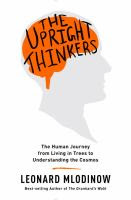
The Upright Thinkers

A personal quest is to better understand how we reached our present level of civilization and our unique role in the world.  Leonard Mlodinow has tackled this in an illuminating and humorous manner.  The main theme is that it took a long time, so long we cannot really comprehend it.  In reality it took many small steps to reach our state of being with each step breaking down into smaller steps.  Sir Isaac Newton has been quoted "If I have seen further it is by standing on the shoulders of giants."

A bit about the author, Leonard Mlodinow.  His father had been imprisoned in a Nazi concentration camp in Poland and as a non scientist is used as a reference point a couple of times.  Leonard himself is a physicist, but has also been on the writing team for "Star Trek; the Next Generation" and "MacGyver."

 The title reflects the monumental change when our ancestors operated on four legs to taking a two legged approach to life.  The disadvantage was that we were not able to move as fast as our predators or our prey.  On the other hand, we had the use of hands and we were able to see further.  From there we evolved further.

We fancy ourselves as modern thinkers, but take for granted the countless efforts (often opposed by the majority) to develop our understanding of the world.  The author thinks the first step was turning stones into cutting tools. 

At early stages humans were generalists meaning each person did everything.  Advancement came with specialization.  Agriculture and domestication of animals developed.  In turn this inspired humans to better understand nature. Another innovation was developing irrigation which the author considers a true wonder requiring much labor using crude tools.  All this led to a surplus of food.  Another step would be to develop a bureaucracy to keep track and a militia to protect resources and then to a priest-king.  There was no separation of church and state.  

Rulers needed information.  Languages developed and writing provided another breakthrough allowing information to spread over distance and time.  Arithmetic needed to keep track of supplies and to measure a wide range of things.  The concept of laws developed.  I would say this signaled the recognition of collective rights.

The author draws our attention to the city of Miletus in today's Turkey.  About 600 B.C. they had a population of 100,000 with an agricultural base and a trading network.  They had colonized as far as Egypt where knowledge of geometry was learned.  Nature was being understood better with one example being eclipses were not the result of Gods.  Questions are being asked.

Aristotle had been a student of Plato and went on to become a tutor to Alexander (the Great).  He returned to Athens and wrote his famous works.   Greek science was advancing, but when Romans took over science declined while engineering advanced.  I had read that the Etruscans are the ones that  gave the Romans a head start with engineering projects, but thinking themselves more practical had less interest in science.

After the Roman Empire fell, the Arabs were fascinated with Greek science and even made their own contributions.  Eventually Europeans re translated many Greek texts to Latin.  Muslim fundamentalists gained control of education and the Arab contributions to science declined.  The printing press opened up communication for all sorts of ideas. which led to paper being more available. 

Galilei Galileo was the next scientific breakthrough noted by Leonard.  Scientific method requires a questioning mind.  He developed a telescope and was able to see craters on the moon and moons around Jupiter.  Perhaps more importantly he developed theories about motion that helped Isaac Newton develop more accurate theories.

Isaac Newton takes Galileo's work to another level with his three laws.  He also invented calculus.  Driven by curiosity and attention to detail.  Although not traveled very much he did correspond extensively.  

The physicist author switches attention to chemistry which focuses on matter.  At one time philosophers thought everything was made up from only four elements--earth, air, fire and water, not realizing that each of these elements are composed of more basic elements.  Dmitri Mendeleev broke down elements with known facts and recognizing that there were many unknown facts.  With persistence spread over many years  this Russian developed the periodic table.  He knew there were gaps in the table, but was able to predict the characteristics of elements and even weights not yet discovered.  The periodic table was first published in 1869.

Biology was another major science field.  Back in 1664 Robert Hooke had been able to identify small components for all living creatures and plants that he called "cells" as they reminded him of monastic cells.  Cells had the ability to copy themselves.  This led to conflicts with established religion.

It took a deeply religious man, Charles Darwin to advance our understanding.  It a series of fortuitous flukes he went on the famous Beagle voyage and gathered much material which he shared with naturalists who gave him feedback.  It was years in developing his theory of natural selection that led us to more modern concepts of evolution.  It was more years before he felt comfortable to release his work and ever since there has been opposition.

Knowledge has advanced through the efforts of thousands of curious people gradually given more resources and the information from predecessors.  Newton and Darwin were not aware of atom structures, but along with many others prepared that path for people like Albert Einstein and Max Planck.  Read more on Einstein:  http://www.therealjohndavidson.com/2021/03/einstein-by-walter-isaacson.html

The author notes that even scientists can get too comfortable with what they know and resist accepting new ideas  Fortunately there seems to be a good supply of curious people willing to ask further questions.  

I found that book difficult to read at times, but also compelling.  I have skimmed over much information, but assure you there is much meat to be discovered.  Non scientists take a lot for granted, but all of us would benefit from a better understanding of what makes up the universe and how knowledge has been accumulated.  Leonard Mlodinow is a gifted writer who makes it all seem to make sense.  The future is unknown, but there is much information to uncover.  Personally I have a greater understanding of what happened before me. 

How are we advancing today?  Teachers are essential;  http://www.therealjohndavidson.com/2012/11/what-teachers-make-by-taylor-mali.html

Sunday, March 14, 2021

Einstein by Walter Isaacson

 Few of us really understand Einstein's theories, but we have all been affected by his thinking.  This post is not intended to explain his theories as frankly I have only a crude understanding.  He surely was a genius, but was more than that. 

It has often been reported that he was slow to talk as an infant.  His parents were educated and he was encouraged to learn in his youth.  He was an exceptional student, but he rubbed some teachers the wrong way.  He was lucky to get a job in a Swiss patent office.  

He had a vivid imagination and a talent for physics, but not at the same level for mathematics.  He did take his job seriously, but it also left him with a lot of time for theoretical thinking.  A lot of what he is remembered for happened while he worked at a low level position.  He was in contact with those he had met while in school.  

He did not reach fame until one of his calculations was confirmed by a total eclipse of the sun in 1919 and we can think the powers that be that the war was over.  His main claim to fame is the equation e=mc2.  At the time it wasn't thought so much for practical uses (such as a bomb), but with his other theoretical thinking did advance our understanding of how the universe works.

After he became well known getting academic jobs was much easier.   He became a professor in Berlin, Germany and developed contacts among the physics elite including Niels Bohr and Max Planck.  

Against his parent's wishes he married a Serbian woman,  Mileva Maric who was also a physicist .  After two children (not including another that was uncovered many years later) they divorced.  An interesting detail of his divorce was that several years in advance he promised Mileva that she would get his prize money from the Nobel Prize for which they were both confident.  After several years of being blocked by the Nobel Prize Committee he won in 1921 in a very carefully worded statement avoiding giving credit for a theory.  Essentially he honored the agreement with his wife.

He spent a lot of effort in refuting Quantum physics, although on good terms with some of its strongest advocates.  Neils Bohr  tells us there is randomness, but Einstein resisted that.  Einstein visited Bohr in Copenhagen and during one of their discussions on a bus ride they overshot their destination and after realizing their oversight went back, but overshot their stopping point again.  In arguing against Quantum physics Einstein stated that God <more generally meaning universe maker> would not play with dice to which Bohr replied "don't tell God what to do."  For me this hinges on free will and like Einstein I feel all actions are predictable if you have enough information, but I would like to believe there is some randomness. 

Two of Einstein's loves were playing the violin and sailing.  He performed with his violin in public, but also to entertain guests.  He managed to sail, although unable to swim wherever he happened to live.  Both activities were relaxing for him.

A pacifist much of his life he changed his opinion and expressed it after Hitler attained power.  In 1933 he made a move to America, thinking it would only be temporary, but in fact he spent the rest of his life  working from Princeton University.  He helped to found the International Rescue Committee recently headed by David Miliband.  He was against the McCarthy hearings which he felt were like fascists he had encountered in Germany.  The F.B.I. had an extensive file on him with much misinformation  suggesting he was sympathetic to Communism which he explicitly was not.

Einstein gave his support to the Hebrew University, but became concerned over Jewish attitudes regarding Arabs.   As far back as 1929 he voiced such opinions as "Should we be unable to find a way to honest co-operation and honest pacts with the Arabs then we have learned absolutely nothing during over 2,000 years of suffering." 

Originally he did not believe that an atom could be split to release the energy he knew to be contained.  Niels Bohr figured an atom could be split.  Another physicist, Leo Szilard became concerned that German scientists would beat the rest of the world and noted they were buying up uranium from the Belgian Congo.  He remembered that Einstein had been friends with the Belgian Queen and felt he might be able to block the German purchases.  He tracked Einstein down while vacationing on Long Island and with Eugene Wisner discussed what should be done.  They went beyond thinking to block German purchases and felt the Americans needed to win the science.  They all agreed that they needed someone with prestige to contact the White House and at first decided on Charles Lindbergh. Lindbergh was actually an isolationist (and Nazi sympathizer) and the group looked elsewhere.  It took a chain of events before a letter reached the attention of President Roosevelt with Einstein's signature.  He wanted no further involvement, but did occasionally provide some calculations.

Several refugees had a lot to do with the development of the bomb.  Many of them became horrified with what might happen.  Einstein developed the idea that the world needs a suprnational authority to control military power.   He was afraid of nationalist sentiment which too often leads to war.

After his death, by his request his body was cremated and he ashes scattered in a nearby river as he did not want to end up as an object of morbid veneration.  Before cremation his body had been subjected to an autopsy and the pathologist extracted his brain thinking it would be of interest to scientists.  However it was bandied about with little worthy studies coming from it.  In 1999 part of it was sent to McMaster University in Hamilton, Ontario.

How does one come up with new innovative ideas?  Einstein did give some clues.  "A new idea comes suddenly and in a rather intuitive way.  But intuition is nothing but the outcome of earlier intellectual experience."  He was curious and rebellious against regimentation. 

Walter Isaacson has written about some pivotal characters and adds to our understanding.   Some of my thoughts on another book of his:  http://www.therealjohndavidson.com/2018/05/leonardo-da-vinci.html

Sunday, April 29, 2018

Rescue

At a time when attitudes are changing, the refugee "problem" is intensifying

Albert Einstein, a refugee from Nazi Germany founded the IRC, International Refugee Committee.  Today the CEO and President is David Miliband, formerly a prominent British politician.  This book is one of his efforts to boost awareness of a serious refugee problem.

Most Americans are vaguely aware of troubles in the Middle East, Africa and Myanmar, but feel it is a problem for somebody else.  It has intruded more in Europe where there is resistance.   In the Mid East and Africa are the majority of refugees living under relatively poor conditions.

Refugees are visualized living in camps, but the majority live in urban settings.  About half of primary age children are not in school.  H. G. Wells once said, "Human history becomes more and more a race between education and catastrophe."  Lack of education breeds bigotry and poor choices.

There is a great deal of hatred focused at Muslims.  Christopher de Baillaigue is quoted, "Islam is no settled entity  It has burst its banks and seethes  with discontent and desires that are immediately recognizable as the consequences of a painful engagement with modernity."  It is suggested that Americans need to support moderate Muslims while crackdowns make the process more difficult.

An earlier blog on refugees:  http://www.therealjohndavidson.com/2015/11/the-syrian-refugee.html

Terrorism is intended to create fear.  It has worked in the west as we have twisted the refugees fleeing terrorism for the terrorists.  Trump campaigning for  president appealed to bigoted attitudes and once elected almost right away took steps that inflamed tension.  Muslims resent being depicted as dangerous radicals.  It was pointed out recently that the Americans need the co-operation of Muslims to deal with terrorists.  Muslims  are being told that Americans hate them and cannot be trusted.  At the same time Americans are resented because they help prop up corrupt regimes.

Much of the refugee crisis could be blamed on big power politics.  Iraq had nothing to do with 9/11 and Americans had been told there were no weapons of mass destruction.  Nonetheless Iraq was invaded with disastrous results and it could be argued aggravated the situation with Syria.  Afghanistan needed a political solution, but no one wanted to be thought soft on terrorists.

Eli Wiesel, a Holocaust survivor, for his 1968 Nobel Peace Prize speech pointed out that victims of political repression depend on the way we use our freedom to make a difference to them.   "The quality of our freedom depends on theirs."  Pope Francis said, "Neglect of refugees is evidence of globalization of indifference."  John F Kennedy called for a "declaration of interdependence."

Excuses for not supporting refugees  are wearing thin.  Charity does starts at home, but it shouldn't end there and we should realize we are all inter connected.   Refugees are fleeing terrorism and if properly integrated are a bulwark against terrorism.  Most refugees are hosted by poor countries that find their resources very stretched.  Germany has stepped up, perhaps because they realize the refugees will help stem a labour shortage.

Political stresses seem likely to be maintained, but another somewhat intertwined factor is climate change.  Syria suffered from a severe drought that forced migration from rural areas to urban and aggravated already established stresses.  Already many residential islands are threatened with rising sea levels.

Miliband acknowledges there is danger in accepting refugees carelessly.  Procedures need to be followed and vetting is critical.

Learned of this book watching David Miliband guest with Fareed Zakaria.

What can you do?  David has a few suggestions.  Refugees need local knowledge.  Practicing language skills.  Get to know them.  I would add don't vote for bigots who have no long term vision.

An excellent TED talk by David is here:  https://www.ted.com/talks/david_miliband_the_refugee_crisis_is_a_test_of_our_character

Saturday, May 28, 2011

Why The West Rules--For Now

Ian Morris, the author goes beyond the titillating title and makes numerous interesting points about our human cultural history. Readers are attracted to the idea in the title because of their own cultural bias and prejudices. We may be part of the dominant culture, or maybe we are about to become the dominant culture or maybe we should be concerned about who dominates or the dynamics.

One of his favorite methods is to use fictional analogies and he starts off with a story that caught me off guard. I thought I had missed some bits of history, but before too long I realized this was not only fiction, but really science fiction. The best science fiction is basically twisting a fact and see how it affects how people relate to one another. In this case the author speculates on how society would have evolved if just a few details were changed. He suggested that instead of the Chinese kow towing to the superior British, it could easily have been reversed if culture had evolved a little differently.

History doesn't begin with the written word, but goes back much further. For instance Neanderthals play a role in the Eastern Western dichotomy, but not in Africa.

The author devises a system for comparing cultures. He identifies four criteria: energy capture, urbanism, information processing and capacity to make war. The data is a little difficult to pin down, but he uses reasonable comparative information. I agree his system is very arbitrary, but useful to explain progress in any culture system.

For most of history both sides (East and West with some acknowledgement of Africa and America) evolve very similarly and very slowly by recent memory. Each side has some advantages, but at various points circumstances combined to give one side a chance to move ahead.  Edible plants, soil, tamable animals, river systems and other factors play key roles in developing a culture. Europe being closer to North America than Asia, by itself encouraged outward exploration. With the start of the Industrial Revolution western civilization surged ahead.

Ian feels that the three main motors of history are fear, sloth and greed. One contention is that developments are not just due to some individual genius that one side or the other has more of, but happen when the time is right.  For instance when the telephone was invented there were others on the verge and there was a contest to determine the winner.  Yes, individuals found themselves in position of making monumental decisions, however the author might say they were set up to be in those positions, but admits they could have decided differently, or have been replaced.

He has built upon other authors. Jared Diamond is one that I admired for his analysis that cultural development has a strong geographical component. Martin Jacques is another who is considered an expert on Chinese development.

For the future Mr Morris sees two likelihoods. One possibility is what he terms "singularity" which is sort of a blending of cultures with world political unity. East and West have been borrowing from each other for a millennium with important contributions from America and Africa for centuries. The other possibility he calls "nightfall" which is disaster which is what has fallen to individual civilizations from the beginning, but now could involve all mankind. The world is globalized and our concerns cross all borders demanding co-ordination. He quotes Albert Einstein, "If the idea of world government is not realistic, then there is only one realistic view of our future: wholesale destruction of man by man." Necessity has been the mother invention in the past and hopefully will be for the future.

I almost forgot, Ian Morris sees that the East should overcome the West in this century, but that is not as important as the race between singularity and nightfall.