Tuesday, February 8, 2022

Knock Down the House

 It was on my list that Netflix offers for several months.  In a mood of indecision I decided to actually watch.  It may be too late to promote it as time has moved on, but it is very educational and inspiring.

 As for many documentaries they had a limited budget.  As some critics pointed out it consisted largely of self conscious interviews.  Another critic wishes they had added Ihan Omar to the mix, but that points out the unfair expectations.  The film makers could have no idea who might win. Who might put on a good "show"?  We see four candidates trying to beat the establishment and were fortunate that one of them was victorious.  The one winner has come on to be a major political "star" who is doing good things.

A good hunk of American voters (and outsiders in Canada) feel the Republicans are all evil and leading America in the wrong direction.  The problem is deeper.  The real problem is the role of money with all prospective politicians needing large amounts of money that comes with strings.  The Republicans might have the inside track on the wealthy, but the Democrats are able to attract big donors, but with obligations that run against voters.  http://www.therealjohndavidson.com/2016/07/dark-money-by-jane-mayer.html

The producers decided to concentrate on a grassroots effort to boost four women with a progressive agenda up against established moderate Democrats.  They all had a good story to tell and a formidable opposition.

Paula Jean Swearengin was up against Joe Manchin.  We now know Joe has a strong corporate donor base that actually works against his constituents.  As a coal miner's daughter Paula Jean was very concerned about Manchin not really helping the actual coal miners and their families that had high rates of cancer deaths.  We hear from Joe with condescending words that on the surface may sound gracious.

Amy Vilela was in Nevada and was upset about the health care system that had led to her young daughter's  death.  I think it was her who noted that Joe Crowley (see below) had donated to her Nevada opponent and we learned that her primary was before Alexandria's so that Crowley wanted to assure that an upset did not occur before he had to face another upstart. 

Cori Bush was a nurse in Missouri and had been jolted by the police shooting of Michael Brown in nearby Ferguson.  She felt  things would not change and decided to tackle the incumbent whose family had held the seat for over a generation.

Alexandria Ocasio-Cortez took on Joe Crowley who had been generating $3 million from corporate sponsors.  He didn't even show up for a debate, sending a substitute.  Still it seemed most people were intending to vote for him again.

Because as we all know AOC won we see more of her campaign efforts.   She did not think of running, but a grassroots organization encouraged her brother to nominate her.  After interviews she was accepted as a candidate for the upcoming primary.  To be official they needed 1,200 signatures, but knowing the Crowley campaign team would scrutinize for discrepancies they aimed for 10,000.  Door knocking was a new experience for Alexandria.  She encountered many who automatically intended to vote for her more experienced opponent, apathetic voters and others not even willing to talk.  She had her first debate where she got to challenge her opponent who didn't show up, on a number of issues making a good impression.  Later she held a rally that drew a lot of attention and made an impression on the press.   Finally Crowley offered a public debate and we were shown lots of condescending remarks from him, but also a few zingers in reply like we have become used to from Alexandria.  Along the way we met her family and her very supportive boyfriend, Riley Roberts.  

Unfortunately her other deserving colleagues did not do as well.  Alexandria pointed out that it could well take 100 progressives so that one could break through.  We wonder why with so much public support that climate change is resisted by politicians.  We wonder why with the rest of the industrial world offering more comprehensive health care that Americans still lack care that could save literally millions of lives.

For me this movie gave insights into what prospects for those unsupported by corporations can expect.  Voters are easily manipulated.  Below are two of the people who took a chance and gave everyone great awareness.

Rachel Lears was the director, writer, cinematographer and producer.  Married to Robin Blotnick who was a writer, editor and producer.  The two received awards for "The Hand that Feeds" (2014) and "Knock the House Down."  Documentaries do not draw the audiences that blockbusters do but they help boost awareness of societal problems and even societal solutions.  Progressive politics is mocked by many, especially by those with opposing vested interests and even those sympathetic tend to express the helplessness of their case.  But they are not helpless if the rest of us can offer some encouragement.

This film was educational, but that is an ongoing process. An earlier bout of learning came when I was involved as campaign worker:  http://www.therealjohndavidson.com/2014/04/my-short-but-educational-political.html

Friday, February 4, 2022

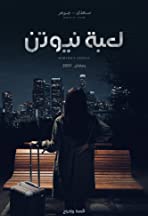
Newton's Cradle

Netflix has been reaching out further to get more films to fill your time.  This year I have noticed more films in Arabic, from different countries such as Lebanon, Jordan, Sudan and Egypt.

One very interesting choice was "Newton's Cradle" (2021) from Egypt a series that is partially filmed in the United States.  When many of us think of Egypt we think of the fascinating ancient history or of more recent riots.  There are to be sure many differences, but the series depicts a more modern Egypt and one where its citizens do not feel out of place in America.

One of the first things that will strike you is the difference in size between the central characters, Hana and Hazem with him looking to be about double her size.  We see her approaching a U.S. customs agent with a voice in her ear which is coming from Hazem in Egypt.  With a few mishaps she gets through, but her difficulties are just beginning.  The reason she is there is because she finally got pregnant and the two of them agreed it would be an advantage to have their child born in America to gain instant citizenship.  Right wingers are upset about that fact. 

She still had several months to go before she is due.  In that time she meets interesting people who rescue her from immediate problems.  One is a very modern young man who is Egyptian and introduces her to a different lifestyle that is offensive to strict Muslims.  Another is much more polished and powerful, Moaness a successful business man with interests in both America and Egypt.  

The birth is premature and a bit scary, common enough in many films, but her life changes by her reaction.  She becomes hysterical and fearful.  The nurses and the doctor make a big decision and tell her at one point that the baby is dead and later that it is in an incubator (true).  She seeks help from Moaness who with help from a lawyer is able to bring the baby back to its mother.  

A few complications ensue.   Her husband has had difficulties contacting her and forms an opinion that she has been leading an immoral life and right in the middle of her birthing pain divorces her over the phone.  Meanwhile Moaness who is already married decides this is an opportunity to marry a very desirable woman.  He intervenes to allow her to maintain a relationship with her new son by using scripture from the Qu'ran to marry him.  This of course exacerbates her relation with Hazem.

Hazem is having his own complications.  He manages an apiary (on Hana's advice) and it is attacked.  Hazem is able to get the bees to attack the actual marauder to kill him.  Strangely the wealthy landlord, Badr decides to make Hazem a partner and encourages him to develop organic honey.  He then forces Hazem to develop honey from opium plants.  His motive is different than you might suppose.  

Meanwhile Moaness wants to consummate his marriage, but Hana stalls.  They both end up in Egypt to try to persuade Hazem to legally finalize the divorce.  If this sounds complicated there are more involving pride, love, betrayal, etc.

One of the last lines of the series paraphrased is "We will have to learn to know each other again"  Humans are strange creatures.  Part way it was upsetting to hear three different characters curse and scream at one another with words that would be hard to take back.  It seemed unreal, but upon reflection I realized it was all too real.  The two men, Moaness and Hazem were both rational, but both wanted to control Hana and both at different times felt betrayed.  Hana also felt betrayed while doing what seemed necessary to keep her son.

On the whole this is a worthy series filmed in America and Egypt with most chapters including scenes from both countries.  You will see a contrast between cultures, but also appreciate the interaction going on.  It consists of 30 episodes each under one hour.  The cast is excellent as so obviously is the crew that put this complex film together.

Tamer Mohsen, was director, writer and involved with production.  From the age of 7 he was fascinated by marionettes and later was able to do an award winning play using marionettes.  He graduated from an engineering university and worked that field for 7 years before pursuing his dream.  

Adam Horner, was a producer in America.  He was an Australian actor before getting involved in international films.   

Tamer Karawan also studied engineering, but then studied music in London.   He wrote his first score in 1998 and has gone onto do music for 80 films.  The score for this film supports the mood.

Mahmoud Youssef handled the cinematography.  Emad Maher and Wael Farag were editors.

Mona Zaki played the lead, Hana with perhaps the most demanding role.  She was rational, but could get hysterical and do a range of emotions.  Winner of many awards in the Middle East.

Muhammad Mamdooh played Hezem.  A simple proud man, but not stupid. 

Sayed Ragab played Badr, a wealthy man who at first tried to shut down Hezem's operation and then coerced him into being a partner and getting involved with opium.  

Muhammad Farrag played Moaness, a wealthy Egyptian in America who like the devil could quote scripture.  The most worldly and sophisticated of the characters.  But he too could lose his temper.

Watching this over a few weeks I had mixed feelings, but in the end I was very impressed.  It has suspense, romance with a very professional production values.

Wednesday, February 2, 2022

Freedom and the law

 The truck convoy to Ottawa has inspired me to point out the short sighted thinking involved that affects everyone.

Laws seem the opposite of freedom, but are they really?  A phrase learned as a youngster, "Your freedom ends at my nose."  In this modern age we recognize that we can be hurt by more than just a punch-we know about pollution, climate change, cigarette smoke, drunk drivers, shoddy construction, opioids  and viruses.  Consider there are also people who would like to cheat us and we all want protection against the many varieties of that effort.   Laws including mandates could be considered as regulations:  http://www.therealjohndavidson.com/2015/10/regulation-how-we-protect-ourselves.html

Early in our primitive history we appreciated that a strong man could pretty much get his way and in effect had the most freedom. However our ancestors, i.e. the ones that survived long enough to propagate realized there were common (less civilized) enemies, even more deadly than our strongest man.  Even the strongest man recognized he needed the support of those weaker.  Collective rights might not have been articulated in the early stages of our development, but in effect they were the mechanism that helped us survive.  In less civilized times viable Leaders might seem to be in charge, but only because others allow them to be:  http://www.therealjohndavidson.com/2014/07/selected.html

As mankind "advanced" some people did indeed become very powerful and could exploit others.   An historical example was King John in England, but he reached a limit when he wanted more money to go to war and was forced to accept the Magna Carta which was a critical step on the way to democracy.  Since then other men (and some women) have reached the heights of power usually by exploiting others.  

More recently wealthy elites have leveraged their resources to control  and exploit the masses.  The American political system depicts one example:  http://www.therealjohndavidson.com/2016/07/dark-money-by-jane-mayer.html

On the other hand there really is such a thing as "the tyranny of the majority."  Often progressive ideas are resisted by the status quo.  Misinformation or intimidation is used to get one's way.   

There is a need for a balance.  The majority should be respected, however should you disagree, by all means protest.  The majority needs to listen to the minority and evaluate their message.  In our current situation accurate information is vital.  If the anti vaxxers are adamant they are right they still need to respect the rights of the rest to protect ourselves and our loved ones.  Isolation seems the most logical option. 

Truck drivers play an important role in our economy and certainly are critical in our supply chain that is under stress.  I am a proud son of a trucker who thought a lot deeper than the convoy truck drivers.  http://www.therealjohndavidson.com/2012/06/remembering-my-father.html

Monday, January 31, 2022

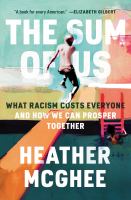
The Sum of Us

The title "The Sum of Us" is in contrast to a common underlying feeling many racists have of a Zero Sum relation by which they mean any advantage given to other races is at their expense.  Heather McGhee feels that racial harmony is beneficial to all races.  In fact the book outlines many instances where whites have hurt themselves with their hatred and indifference towards blacks.

This book aligns with my belief that racism will not end until we all understand that it hurts EVERYBODY.  Most of us privileged ones are unaware of the costs of racism.

 One early example was an identified racist who studied librairies in different states before the American Civil War.  He discovered that in slave states there were significantly fewer librairies than were in non slave states.  He reasoned that wealth was concentrated among slave owners who were able to restrict funds spent on the poorer white citizens.  This pattern has continued into modern times with less public expenditures in the former slave states.

The Republicans and their 1% supporters have an economic plan that involves paying less taxes and having less regulations.  This will allow them to exploit the less fortunate.  Stated bluntly, most voters would not accept this, so another strategy has emerged.  Stir up natural prejudices and cast blame elsewhere.  Racism and homophobia are effective tools. 

We are somewhat aware of many methods of suppressing black votes, but the voting process was set by the Constitution that was decided by wealthy white men.  They allowed only propertied men to vote.  Various political and economic factors forced an expansion to include all white men, black men, women and even lowered the voting age.  The wealthy white men are still trying to control who votes which hurts other whites.

In the 20th century many American cities built public swimming pools, but many whites objected against blacks being so close.  They tried various maneuvers to oust the unwanted blacks, but in many cases the swimming pools ended up being closed and filled in with dirt.  

Americans have had a few attempts to offer a public health program to provide health security for all its citizens, but early attempts were thwarted primarily by vested interests with racist strategies playing a role.  When finally Barrack Obama was able to implement such a plan, often referred to as Obamacare it was met with fierce opposition and it became evident that a racist strategy was a key.  The Democrats were forced to use a state by state implementation with southern States resisting, even refusing to accept federal money.  The tragic reality for the voters in these states was it would have benefited more whites than blacks, but of course everyone lost out.   Check:  http://www.therealjohndavidson.com/2019/06/dying-of-whiteness.html

Unions have been a force for improving working conditions, but many kept blacks out, with the blessing of the white owners.  But when unions are unified they have more power.  

Climate Change is getting more attention, but again many whites were against efforts to deal with it, partly because wealthy whites had vested interests, but also because Obama crusaded for it.  When Trump got power he automatically tried to undo Obama's legacy.

Housing has historically been how most people develop wealth.   After many years of building equity in a house, the next generation starts off with an advantage.  Blacks were deliberately restricted in obtaining affordable housing.  They ended up living in the poorer parts of town which further limited educational opportunities.   

What can be done?  There are many informal efforts and some progress from natural relations, but there is need for faster actions, that only Government can provide. 

Reparations is a very touchy subject, but the author suggests one tool might be to allow blacks (who can be traced to enslaved ancestors) be given grants to help with down payments.  The mortgage interest deduction gives an advantage to those who have qualified for a mortgage, but it means everyone else is subsidizing it.  It will take at least a generation to give blacks a chance to accumulate wealth the way many whites have had for over a century.

Misinformation abounds as does fear.  CRT (Critical Race Theory) is actually greatly needed, as much for ignorant whites as for anyone and should be protected as free speech.  There has been a white view taught in American history.  One study showed that only 8% of high school students knew that slavery was a primary cause of the American Civil War.  Social media as been an effective platform for racists beliefs with one example being in June 2020 seven out of ten Facebook shared posts were anti Black Lives Matter.  One retort to Black Lives Matter was that "All Lives Matter" ignoring that in fact black lives had not really been acknowledged.

Education is mainly a state responsibility and in Canada it is controlled by the provinces.  The federal government can offer incentives and guidelines which although likely to be resisted need to be made as enticing as practical.  Eventually students will learn, but it will take at least a generation to be sufficient. 

Social media is a key element and there are concerns of censorship.  Hateful ignorant communication needs to be monitored and contested.  Legally there are limitations, but the government has a responsibility to promote truth.  

The Supreme Court nomination is happening and we have been promised a black woman, who will also have to be excellent.  Already critics are claiming the decision should not be based on demographics.  They over look that over 120 Supreme Court justices  have been, with the vast majority white men and no black women.  Of course demographics matter as everyone has a different perspective. 

The establishment always has the advantage over minorities, but as the minorities are gradually increasing in numbers their leverage will increase.

As a Canadian I have been smug looking at all the racial turmoil in the United States, however looking deeper we are not so different.  In fact it is human nature to emphasize the differences, but we do better when we focus on the similarities.

Friday, January 28, 2022

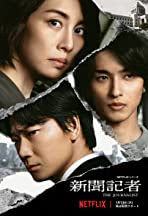
The Journalist

 Corruption is everywhere.  To be honest it is a regular theme of films and in some cases seems greatly exaggerated.  But is it?  If we are not vigilant it is easy to imagine it will take over our lives.  Fortunately there are still people dedicated to fighting it.  "The Journalist" (2022) got my attention by how much effort and time is required to fight it and how realistic it seemed.  Available on Netflix with a dubbed version.

 We often wonder how did someone get to be the "boss"?   Was it hard work and talent?  For many it is.  Most of realize that it is in our best interest to reward hard work and talent.  But others, especially short term thinkers want to do whatever it takes to get what they want as soon as practical.  What they want usually is related to money or power.

The lead reporter Matsuda recognizes a government deal is not right and wants to expose it. A scandal that we realize from the start has its origins at the top.  Being at the top means having power.  Society depends on the rational use of power, but we all know there is much abuse.

Journalists get a bad rap, seemingly more interested in a scoop than facts.  In all cases they have to be responsive to what their bosses want and in turn we realize their bosses are under pressure.  On the other hand we as consumers (including for entertainment), many of us love it when the big guy is exposed.  If too close to our vested interests we might be part of the problem.

There are the crooked insiders, the coerced insiders, the hurt family, the crusading reporter and in this version an impressionable youth.

The bad guys look with their dirty tricks and intimidation like they are going to get away with it.  Japan has a reputation to us outsiders as place where a suicide is more common.  In this case an honest bureaucrat is forced to alter some details to protect his boss(es).  He realizes a lot of harm to others will be done and despite his efforts to reverse.  He cannot live with the guilt and commits suicide which I would classify as altruistic)  He left a suicide note for his wife with one page expressing his sorrow at letting her down  and the second page with details of what he had been forced to do.  She decides to keep it to herself and is resentful of people (especially reporters) at intruding into her life.  

We meet a young boy (late teens) who delivers newspapers, but declares he is not interested in the news.  A girl the same age mocks him, but also encourages him to take an interest.   It is his uncle that he admires who is the one who commits suicide

An interesting technique is to parallel reporter questions on two separate issues  In one instance the reporter is asking tough questions about the scandal.  In another the young trainee reporter is asking the original girl about her prospects.  Coronovirus intrudes as it affects the girl's job offer.

The ending is unresolved.  We know that a journalist has forced the issue to court and that is the point.  A young man is inspired and that is another point.  

I was impressed with the message and the presentation.  The cast and crew that made it possible are only partly recognized.  Here are a few notes:

Michihito Fuji directed and was one of the main writers.  She also directed and wrote another film "The Journalist" (2019) that had been based on the same author.

Isoko Mochizuki wrote the book based on her own personal experiences as a journalist.   She has been involved with the two films plus a documentary on the filming.

Ryoko Yonekura played the lead character as an aggressive journalist who was also empathetic.   She has been acting in films since 2000.

Ryusei Yokohoma played the naive young man who ended up training to be a journalist.  He is very likable.  Despite his apparent youth he has over 40 screen credits including many series.

Another recent excellent Japanese series on Netflix:  http://www.therealjohndavidson.com/2021/12/japan-sinks-people-of-hope-emigration.html

Saturday, January 22, 2022

Pushpa: The Rise Part I

" Pushpa:  The Rise Part 1" (2021) may not be your cup of tea.  Violence, action- gore-lots of southern Indian music/dance (very aggressive).  It has an interesting story and characters and well presented..

This multi lingual blockbuster film is originally in Telegu but has been dubbed in four other languages (Tamil, Hindi, Kannada and Malayalam) with English subtitles.  Special item numbers in each of the languages.   This is a very action oriented film with a fair amount of gore--guns play a role, but unreal physical fighting is more common and is spectacular.  Follows the basic format of many gangster movies where a disadvantaged person fights against tremendous odds and achieves respect and power.  The cinematography is spectacular.

Part of the tension is provided by smuggling high value sandalwood logs which involves misleading authorities or bribery.  I googled Red sandalwood and learned that is very rare and thus protected.  It is prized for its beauty and in Japan they have discovered using it for musical instruments it has a pleasant acoustical effect.  It is also used in dyes. 

The family and gang dynamics provide more tension.  Pushpa is an illegitimate son while two legitimate sons are wealthy and powerful in the smuggling business and don't want to include him. The brothers admit to knowing their father visited his mother, but claim their father might not have been the only visitor.  A photo in a locket with father and son has been taken away.  He is very supportive of his mother.  After proving himself clever and ruthless, Pushpa takes a fancy to a woman while a friend pays her to smile at him.  He is shy, but you know she will provide the romance. 

This blockbuster was very well done and I look forward to the sequel.  Here are a few of the contributors.

Sukuma is the director and writer.  He wrote" Rangasthalam 1985" (2018).

Music by Devi Sri Prasad who has also been a playback singer.    He has worked with Tamil and Telegu films and had his music used in different languages.  An award winner.

Miroslaw Brozek was the cinematographer got his start in Poland with other action films.  He did a Telegu movie, "Gang Leader" (2019).   It is easy to tell that the picture would look even more amazing on a large screen.

Allu Arjun played the casual and arrogant (but also shy) hero Pushpa.  He has been noted for his unique dance.  He started in the Telegu film trade and has built up a very strong following all over India.

Fahadh Faasil has a relatively small role, but a different look from his many other films.  He is on the other side of the law, but really a ruthless corrupt cop.  We first see him dealing with canabis smuggling, but in fact takes a huge bribe.  He is listed to have bigger role in part 2.  He got his first break because his father was big in the Malayalam film trade got him into starring roles at a young age, but when he flopped he kept away for films for nine years.   Then he began a career as a popular respected actor with such Maylayalam films as "Bangalore Days" (2014),  "Take Off" (2017),  "Thondi Muthalum Driksakshiyum" (2017)and "Nijan Prakashan" (2018).  Check  http://www.therealjohndavidson.com/2021/03/bangalore-days.html

Rashmika Mandanna plays the leading lady.  She started with a Kannada film and has also done Telegu.  

Part 2 to be released in India just before Christmas 2022 and likely accessible in U.S./Canada January 2023

While gathering material  for "Pushpa" I decided to start watching "Shyam Singha Roy" (2021) but felt compelled to watch the whole film straightaway.  It deserves a separate blog, but because I have already met my quota for the month and it is also a Telegu movie I am just adding a bit here.  It is different and very highly recommended by me.  You do have to accept the concept of reincarnation, but it is very poetically done.   I included a dance sequence that I found really good in a Facebook post just before finishing this post.  The story is very interesting starting with a young rising film director being charged with plagiarism.  The story then diverts to events a few decades before.  

 Produced by Venkat Boyanapalli. Directed by Rahul Sankrityan.  Written by Salyadev Janga.  Music provided by Mickey J. Meyer.  Cinematography by Sanu John Varughese.  Editing by Sanu John Varughese.  The principle actors were:  Nani, Sai Pallavi, Krithi Shetty, Madonna Sebastian, Murali Sharma, Jishu Sengupta, Rahul Ravindran and Leela Samson.

Both films reflect good films come in the Telegu language.

As usual I have bolded films I have seen.

Thursday, January 20, 2022

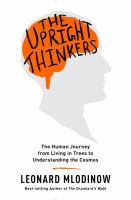
The Upright Thinkers

A personal quest is to better understand how we reached our present level of civilization and our unique role in the world.  Leonard Mlodinow has tackled this in an illuminating and humorous manner.  The main theme is that it took a long time, so long we cannot really comprehend it.  In reality it took many small steps to reach our state of being with each step breaking down into smaller steps.  Sir Isaac Newton has been quoted "If I have seen further it is by standing on the shoulders of giants."

A bit about the author, Leonard Mlodinow.  His father had been imprisoned in a Nazi concentration camp in Poland and as a non scientist is used as a reference point a couple of times.  Leonard himself is a physicist, but has also been on the writing team for "Star Trek; the Next Generation" and "MacGyver."

 The title reflects the monumental change when our ancestors operated on four legs to taking a two legged approach to life.  The disadvantage was that we were not able to move as fast as our predators or our prey.  On the other hand, we had the use of hands and we were able to see further.  From there we evolved further.

We fancy ourselves as modern thinkers, but take for granted the countless efforts (often opposed by the majority) to develop our understanding of the world.  The author thinks the first step was turning stones into cutting tools. 

At early stages humans were generalists meaning each person did everything.  Advancement came with specialization.  Agriculture and domestication of animals developed.  In turn this inspired humans to better understand nature. Another innovation was developing irrigation which the author considers a true wonder requiring much labor using crude tools.  All this led to a surplus of food.  Another step would be to develop a bureaucracy to keep track and a militia to protect resources and then to a priest-king.  There was no separation of church and state.  

Rulers needed information.  Languages developed and writing provided another breakthrough allowing information to spread over distance and time.  Arithmetic needed to keep track of supplies and to measure a wide range of things.  The concept of laws developed.  I would say this signaled the recognition of collective rights.

The author draws our attention to the city of Miletus in today's Turkey.  About 600 B.C. they had a population of 100,000 with an agricultural base and a trading network.  They had colonized as far as Egypt where knowledge of geometry was learned.  Nature was being understood better with one example being eclipses were not the result of Gods.  Questions are being asked.

Aristotle had been a student of Plato and went on to become a tutor to Alexander (the Great).  He returned to Athens and wrote his famous works.   Greek science was advancing, but when Romans took over science declined while engineering advanced.  I had read that the Etruscans are the ones that  gave the Romans a head start with engineering projects, but thinking themselves more practical had less interest in science.

After the Roman Empire fell, the Arabs were fascinated with Greek science and even made their own contributions.  Eventually Europeans re translated many Greek texts to Latin.  Muslim fundamentalists gained control of education and the Arab contributions to science declined.  The printing press opened up communication for all sorts of ideas. which led to paper being more available. 

Galilei Galileo was the next scientific breakthrough noted by Leonard.  Scientific method requires a questioning mind.  He developed a telescope and was able to see craters on the moon and moons around Jupiter.  Perhaps more importantly he developed theories about motion that helped Isaac Newton develop more accurate theories.

Isaac Newton takes Galileo's work to another level with his three laws.  He also invented calculus.  Driven by curiosity and attention to detail.  Although not traveled very much he did correspond extensively.  

The physicist author switches attention to chemistry which focuses on matter.  At one time philosophers thought everything was made up from only four elements--earth, air, fire and water, not realizing that each of these elements are composed of more basic elements.  Dmitri Mendeleev broke down elements with known facts and recognizing that there were many unknown facts.  With persistence spread over many years  this Russian developed the periodic table.  He knew there were gaps in the table, but was able to predict the characteristics of elements and even weights not yet discovered.  The periodic table was first published in 1869.

Biology was another major science field.  Back in 1664 Robert Hooke had been able to identify small components for all living creatures and plants that he called "cells" as they reminded him of monastic cells.  Cells had the ability to copy themselves.  This led to conflicts with established religion.

It took a deeply religious man, Charles Darwin to advance our understanding.  It a series of fortuitous flukes he went on the famous Beagle voyage and gathered much material which he shared with naturalists who gave him feedback.  It was years in developing his theory of natural selection that led us to more modern concepts of evolution.  It was more years before he felt comfortable to release his work and ever since there has been opposition.

Knowledge has advanced through the efforts of thousands of curious people gradually given more resources and the information from predecessors.  Newton and Darwin were not aware of atom structures, but along with many others prepared that path for people like Albert Einstein and Max Planck.  Read more on Einstein:  http://www.therealjohndavidson.com/2021/03/einstein-by-walter-isaacson.html

The author notes that even scientists can get too comfortable with what they know and resist accepting new ideas  Fortunately there seems to be a good supply of curious people willing to ask further questions.  

I found that book difficult to read at times, but also compelling.  I have skimmed over much information, but assure you there is much meat to be discovered.  Non scientists take a lot for granted, but all of us would benefit from a better understanding of what makes up the universe and how knowledge has been accumulated.  Leonard Mlodinow is a gifted writer who makes it all seem to make sense.  The future is unknown, but there is much information to uncover.  Personally I have a greater understanding of what happened before me. 

How are we advancing today?  Teachers are essential;  http://www.therealjohndavidson.com/2012/11/what-teachers-make-by-taylor-mali.html